Best Shades for Sunroom Windows That Work
 Written By Canadian Blinds Pros
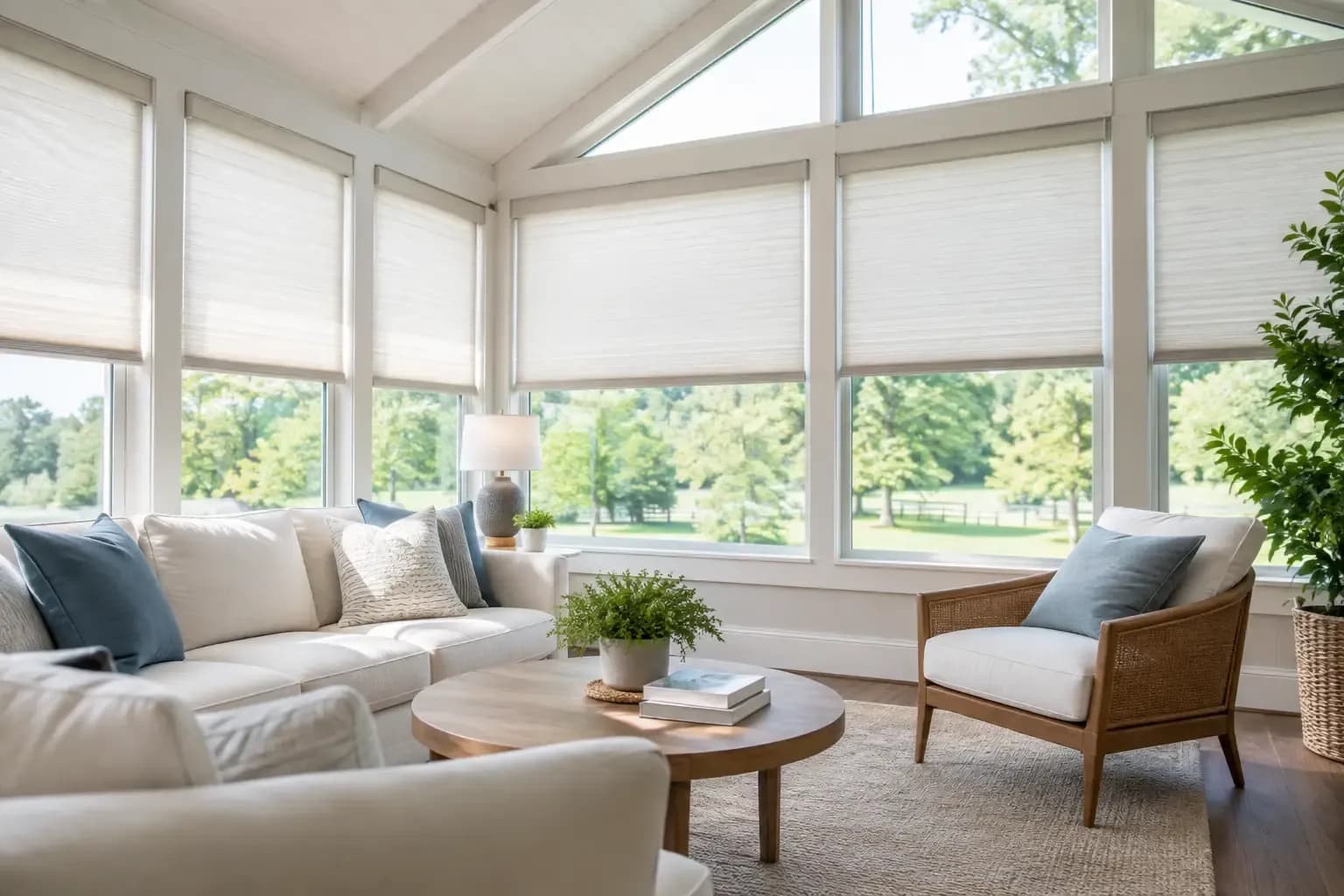
A sunroom should feel bright without becoming blinding, beautiful without overheating, and open without leaving your home on display after dark. Finding the best shades for sunroom windows comes down to managing that balance. The right custom treatment lets you enjoy the view and natural light while reducing glare, protecting furnishings, improving comfort, and adding privacy when you need it.
Unlike a standard bedroom or office, a sunroom often has large panes of glass, wide sightlines, and changing light from morning through evening. One window covering rarely suits every sunroom. The best choice depends on the room’s orientation, how you use it, your privacy needs, and whether you want a soft decorative finish or a clean, architectural look.
What Sunroom Shades Need to Do
Before choosing a fabric or operating style, consider the main problem you want your shades to solve. A south- or west-facing sunroom may need meaningful glare and heat control. A room facing a neighboring home may need privacy without making the space feel closed in. If the room is used for reading, working, or watching television, light direction matters as much as light level.
UV protection is another priority. Direct sunlight can gradually fade flooring, artwork, upholstery, and area rugs. Shades that filter UV rays help preserve the finishes you selected for the room while still allowing daylight to remain part of the design.
The window layout matters, too. Long rows of windows, oversized glass panels, skylights, and patio doors each require precise measuring and a treatment that operates cleanly. Custom-made shades are especially valuable in sunrooms because small fit issues become noticeable across large, bright windows.
Best Shades for Sunroom Windows by Priority
Solar shades for glare control and preserved views
Solar shades are often the strongest choice for sunrooms with expansive views. Their specialized fabrics filter harsh sunlight and reduce glare while maintaining a level of outward visibility during the day. They create a clean, contemporary appearance that works particularly well in modern homes, condos, and spaces with minimal interior detailing.
Openness factor is the key decision. A more open weave preserves a clearer view and admits more daylight, while a tighter weave provides more privacy and solar control. For a sunroom that gets strong afternoon sun, a tighter fabric may feel noticeably more comfortable. For a shaded room where the view is the main feature, a more open fabric can be the better fit.
The trade-off is nighttime privacy. When lights are on inside, solar fabrics are not fully private on their own. They work best where exterior privacy is less of a concern or when paired with another solution for evenings.
Sheer shades for softly controlled daylight
Sheer shades bring a more refined, layered look to a sunroom. They diffuse direct light rather than simply blocking it, creating a softer glow that can make a glass-heavy room feel more welcoming. Their adjustable vanes allow you to shift between filtered daylight, a clearer view, and enhanced privacy.
This makes sheer shades a strong option for sunrooms used as sitting areas, breakfast spaces, or entertaining rooms. They offer more light control than a fixed sheer panel while keeping the room visually light. Choose them when atmosphere matters as much as performance.
Because fabrics and vane positions affect the result, an in-home consultation is useful. Looking at samples in the actual room reveals how the material responds to your sun exposure, wall colors, flooring, and furniture throughout the day.
Roller shades for a streamlined, flexible solution
Roller shades are a practical choice for sunrooms with many individual windows. Their simple profile keeps visual clutter low, and the broad selection of fabrics makes them adaptable to different priorities. Solar-filtering roller shades are ideal for daylight and view retention, while room-darkening fabrics offer more privacy and light reduction.
They are also well suited to windows with limited depth or rooms where you want the coverings to disappear when raised. A carefully selected fabric can make roller shades feel tailored rather than basic, whether your style leans warm and textural or sleek and modern.
For rooms with variable conditions, consider using different fabric types on different elevations. The windows hit hardest by afternoon sun may benefit from a denser solar fabric, while less exposed windows can use a more open material. Consistent color and hardware can keep the overall design cohesive.
Zebra shades for adjustable light and privacy
Zebra shades use alternating sheer and opaque fabric bands to provide flexible control in one clean treatment. By aligning the bands, you can filter daylight and maintain a sense of openness. Shift the alignment, and the opaque sections create greater privacy and shade.
That versatility makes zebra shades particularly useful in sunrooms that change function throughout the day. You might want soft morning light during breakfast, reduced glare for an afternoon laptop session, and more privacy after sunset. The contemporary horizontal pattern also complements newer Toronto-area homes and condo-style interiors.
They are not always the first choice for rooms with extreme heat exposure, where a more dedicated solar fabric may perform better. Still, for homeowners who want an attractive middle ground between light filtering and privacy, they offer excellent everyday control.
Roman shades for warmth and decorative impact
Roman shades add fabric texture and a more furnished appearance, making them ideal for sunrooms designed as an extension of the living area. They can soften a room filled with glass, metal, and hard surfaces, especially when paired with comfortable seating, rugs, and layered lighting.
Fabric selection is essential. A light-filtering lining provides gentle diffusion and a softer visual effect. A privacy or room-darkening lining gives stronger coverage, though it will reduce the open feeling that many homeowners want from a sunroom. Roman shades are best when the room benefits from a decorative focal point and the windows do not need constant adjustment throughout the day.
Do Not Overlook Motorized and Smart Controls
A sunroom may have more windows than any other room in the home, often in places that are difficult to reach. Motorized shades make daily use much easier, especially for high windows, wide glass areas, and windows behind furniture.
Smart controls add another level of convenience. You can schedule shades to lower during the hottest afternoon hours, raise in the morning, or adjust them from a phone when you are away. This is not just a luxury feature. Consistent scheduling can help reduce glare, protect interiors from UV exposure, and prevent the room from becoming uncomfortably warm.
For families, cordless motorized operation also creates a cleaner look and supports a safer window-covering setup. Battery-powered options can suit many retrofit projects, while hardwired systems may be worth considering during a renovation or new build.
Match the Shade to Your Sunroom’s Direction
Window orientation changes the recommendation. East-facing sunrooms receive strong morning light, so light-filtering or adjustable shades are often enough. West-facing rooms face low, intense afternoon sun and typically benefit from solar shades or denser fabrics that reduce glare and heat.
South-facing sunrooms receive sustained daylight through much of the year. Solar shades are frequently a practical starting point here, particularly when the room has large uninterrupted glass. North-facing sunrooms receive softer, indirect light, which gives you more freedom to prioritize decorative fabrics, sheer shades, or a lighter level of filtering.
Privacy should be considered separately from daylight control. A shade that performs beautifully during the day may become transparent at night when interior lights are brighter than outdoors. If your sunroom faces a street, neighbor, or shared outdoor area, ask to see the shade’s nighttime privacy performance before making a final choice.
Why Custom Measurement Changes the Result
Sunroom windows are rarely as simple as they appear. Frames may vary slightly, trim depth can limit mounting options, and large expanses need treatments that align cleanly from one opening to the next. A made-to-measure solution avoids the gaps, uneven hems, and awkward operation that can distract from an otherwise polished space.
Professional installation also matters for function. Properly positioned brackets, level shade alignment, and accurately programmed motorized controls affect how the shades look and how long they last. Canadian Blinds Pros provides in-home guidance, custom measurement, and installation, helping homeowners choose a solution based on the room itself rather than a product photo.
A sunroom is meant to be the place you gravitate toward when the light is good. Choose shades that let you keep that light on your terms, and the room becomes comfortable enough to enjoy from the first coffee of the day to a quiet evening indoors.